

We met at 7:45 a.m. on Monday morning at the school’s indoor pool. With our suitcases, backpacks, and great anticipation, we set off on our bus ride to the nature reserve. During the trip, there was plenty of talking, laughing, and speculation about the days ahead.
After a brief introduction, everyone received their room keys and was able to check into their rooms. Most were assigned to double or triple rooms, which helped create a pleasant sense of community right from the start.
Afterward, we gathered in the classroom. There, we were given a presentation on the nature reserve, the planned studies, and the unique features of the Holy Sea. Particularly impressive was the story of how the lakes were formed—each one created by a sinkhole approximately 1,000 years apart.
Over the course of the first day, we explored the site. We took our first water and soil samples. Together, we analyzed various measurements and gained an initial insight into scientific fieldwork.
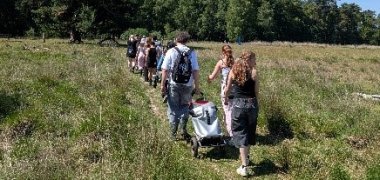
During a hike through the nature reserve, we were able to observe numerous plants, various habitats, and the unique landscape of the Holy Sea. Although the high temperatures made the hike strenuous, they also created a real summer camp atmosphere.
.
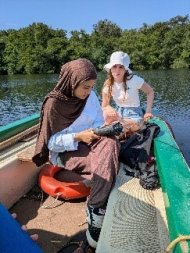
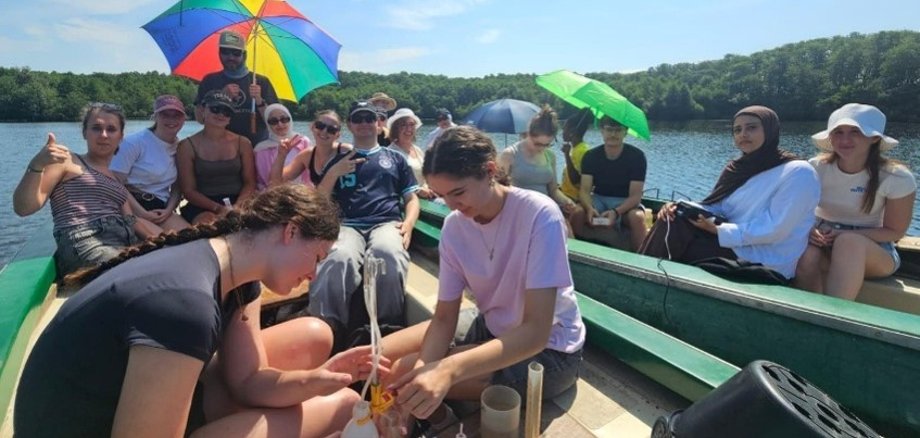
Tuesday marked the highlight of the entire field trip: the investigations on the lake. We set out together on the vast sacred sea in two paddleboats. Once on the water, we worked closely together and took on various tasks. In the middle of the lake, we collected water samples from different depths. Meter by meter, we measured temperature, oxygen content, pH, conductivity, and other parameters. This clearly demonstrated how conditions in the water change with increasing depth.
Working with the Secchi disk was particularly exciting. We used it to determine how far sunlight penetrates into the water. This allowed us to directly observe the importance of light for photosynthesis and the lake’s oxygen content.
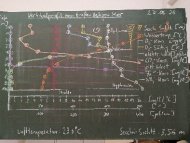
After lunch, the students analyzed the data they had collected. Working together, they created graphs and examined the relationships between light, oxygen, temperature, and the lake’s trophic levels. The data they had collected themselves made the theory covered in class much easier to understand.
The evenings were spent together. Some watched a movie, others played board games, or chatted in their rooms. It was precisely these shared moments outside of class that made the field trip a special experience for many.
On Wednesday morning, the rooms were cleared out and the luggage was packed.
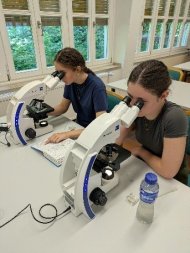
After breakfast, the final activity of the program began: examining plankton under a microscope. To do this, we analyzed water samples from the lake. Under the microscopes, we were able to observe numerous species of plankton. It was particularly fascinating to suddenly see the lake’s often-invisible creatures at high magnification. The observations were also displayed on screens so that everyone could follow the results together. This is how we learned about different types of phytoplankton and zooplankton and discovered the important role these organisms play in the lake’s ecosystem.
It was particularly interesting to learn that some plankton species are capable of photosynthesis, while others feed on smaller organisms. This highlighted just how important even the tiniest organisms are to a lake’s entire food web.
Around noon, it was finally time to say goodbye. After the suitcases were loaded, we set off on the return trip to Gronau. During the bus ride, we reflected together on the past few days.
The field trip to the Holy Sea vividly demonstrated that biology can be so much more than just classroom instruction. Hands-on investigations, practical experiences, and the shared experience of nature made the three days a truly special experience.
In addition to many new insights, we’re taking home, above all, shared memories, new experiences, and a whole new perspective on nature.
By A. Fabio Bayraktar